


MIDEA Dubai Schools Games 2026–27 Expands to 23,000 Students and 31 Championships
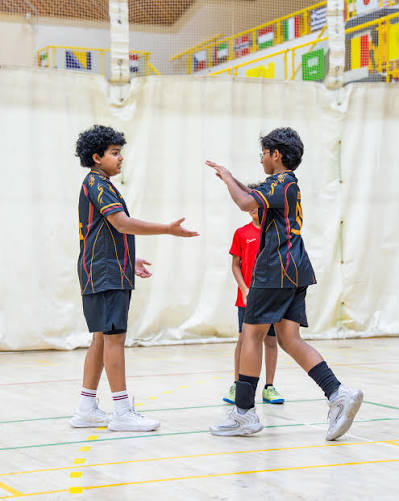
Dubai’s school sports calendar is about to enter its biggest season yet.
The MIDEA Dubai Schools Games 2026–27 will bring together more than 23,000 students from 210 schools across 93 event days and 31 championships, creating one of the largest youth sports programmes in the UAE.
The new season begins in October and introduces five additional sports: 3×3 basketball, e-sports, triathlon, freestyle snowboarding and wrestling.
For Dubai’s young athletes, the Games are far more than a collection of school competitions.
They provide a structured pathway into competitive sport.
Students can represent their schools, experience organised events, compete against athletes from across the city and potentially enter talent-development pathways.
For many, it will be the first time sport feels like something bigger than a physical education class.
A Major Expansion for School Sport
The scale of the 2026–27 season is impressive.
More than 23,000 students are expected to participate.
Two hundred and ten schools are involved.
Thirty-one championships will take place.
Ninety-three event days are scheduled across the academic year.
Those numbers matter because school sport often determines whether young people develop a long-term relationship with physical activity.
Elite athletes may eventually move into clubs and professional systems.
Most students will not.
But the benefits of school competition extend far beyond producing future champions.
Sport teaches preparation.
It teaches how to deal with winning and losing.
It teaches teamwork.
It teaches young people how to perform under pressure.
It also gives students another place to succeed outside the classroom.
Five New Sports Broaden the Opportunity
One of the most interesting parts of the new season is the addition of five sports.
3×3 basketball brings a faster, more compact version of traditional basketball.
E-sports introduces a competitive discipline that appeals to a very different group of students.
Triathlon combines swimming, cycling and running.
Freestyle snowboarding introduces a winter-sports discipline in a city better known for desert conditions.
Wrestling adds one of the oldest forms of competitive sport.
The variety is important.
Not every child is interested in football or basketball.
A student who feels average in one sport may discover exceptional ability in another.
The wider the programme becomes, the greater the chance that young people find something that genuinely suits them.
The Season Begins With Table Tennis
The opening competitions begin in October.
Table tennis runs from 6 to 8 October at Danube Sports World, bringing together boys and girls across U13, U15 and U17 categories.
Table tennis is sometimes underestimated because the playing area is small.
At competitive level, the sport demands extraordinary reaction speed, coordination and tactical intelligence.
Players have fractions of a second to read spin, movement and placement.
School competitions provide an ideal environment for young athletes to develop those skills under pressure.
Archery Follows on October 14
The MIDEA Dubai Schools Games Archery Championship takes place on 14 October at the Dubai Club for People of Determination.
Competitors across U11, U13, U15 and U18 age groups will shoot under rules based on World Archery standards.
Archery creates a completely different sporting challenge from running or team games.
Success depends heavily on concentration.
A competitor must repeat the same technical movement while managing nerves.
Small errors can significantly affect the score.
That makes archery an excellent example of why a broad school sports programme matters.
Athletic ability is not only about speed or strength.
Control and precision are athletic qualities too.
Triathlon Makes Its Dubai Schools Games Debut
The new Triathlon Championship takes place on 25 October at Mamzar Beach Park.
Young athletes aged 6 to 12 compete in Junior Super Sprint categories, while students aged 13 to 18 can enter the Super Sprint individually or as part of a relay.
Up to 500 participants can enter.
This is a major addition because triathlon requires athletes to combine three completely different disciplines.
Swimming creates one set of physical demands.
Cycling requires another.
Running asks the athlete to perform on tired legs after the first two disciplines.
For young competitors, the event can introduce skills such as pacing, transitions and equipment management.
Relay participation makes the sport more accessible to students who may be strong in one discipline but not yet confident in all three.
Basketball Qualifiers Begin in October
Basketball qualifiers start on 5 October at All Sports Arena.
Teams compete across U11, U13, U15 and U17 categories.
The qualification structure adds another level of competitive realism.
Teams are not simply playing isolated school matches.
They are trying to progress toward championship events.
That creates pressure.
Students learn that preparation over several matches matters.
One poor result does not necessarily end a campaign.
Consistency becomes important.
Coaches also need to manage rotations, tactics and team development across a longer period.
Football Remains a Major Part of the Programme
Football qualifiers begin in November at Dubai Sevens Stadium.
Boys and girls compete across multiple age categories before successful schools advance toward championships in January 2027.
Football remains one of the most widely played youth sports in Dubai.
The Games provide school players with competition outside ordinary training sessions.
That distinction matters.
Training develops skill.
Competition tests whether those skills can still be performed when an opponent is actively trying to stop you.
Young players learn decision-making, communication and emotional control.
Golf Brings School Athletes to Arabian Ranches
The Golf Championship is scheduled for 28 October at Arabian Ranches Golf Club.
Students compete on the championship course using a Stableford scoring format.
Golf adds another very different skill set.
Players need technique, patience and course management.
There is time to think between shots.
That can actually increase psychological pressure.
A mistake cannot always be corrected immediately.
Young golfers need to reset mentally and focus on the next shot.
These lessons extend beyond sport.
Talent Identification Adds Long-Term Value
One of the most important elements of the Dubai Schools Games is the talent-development pathway.
Performances can be monitored by the Dubai Talent ID Committee and recorded within the Talent ID database.
Promising athletes may then be considered for national pathways, scholarships and tailored development opportunities.
This gives competition additional meaning.
A talented student who has not yet entered a professional academy may be noticed through school sport.
That can be especially important for families unfamiliar with the wider sporting system.
School becomes the entry point.
Free Participation Makes the Programme More Inclusive
The Dubai Schools Games operate without participation fees for schools.
That removes an important barrier.
Youth sport can become expensive quickly.
Club memberships, coaching, equipment and competition fees add up.
A school-based system provides access to organised competition without requiring every family to finance a private sporting pathway from the beginning.
This allows a wider group of young people to participate.
Girls’ Sport Has a Strong Place in the Programme
Many competitions include both boys’ and girls’ categories.
This visibility matters.
The more often girls see competitive sport treated as normal, the stronger the participation culture becomes.
School years are especially important because this is often when young people either continue with sport or gradually stop participating.
Providing meaningful championships gives students something to train toward.
E-Sports Reflects a Changing Definition of Competition
The inclusion of e-sports will probably generate debate among people with traditional definitions of sport.
That debate itself demonstrates how youth competition is changing.
Modern students interact with digital environments very differently from previous generations.
Competitive gaming requires reaction speed, decision-making, teamwork and strategic planning, even if the physical demands differ from athletics or football.
By including e-sports alongside conventional disciplines, the Games acknowledge that competitive culture is evolving.
Freestyle Snowboarding Shows Dubai’s Unique Infrastructure
Perhaps no new discipline better reflects Dubai’s sporting uniqueness than freestyle snowboarding.
Few cities in a desert climate could realistically include snowboarding in a school sports programme.
Dubai can.
Indoor winter-sports facilities create opportunities that would otherwise require international travel.
For students, this expands the range of sports they can experience without leaving the city.
Sport Can Support Academic Development Too
Competitive sport is sometimes treated as something separate from education.
The two can support one another.
Athletes learn scheduling.
They learn responsibility.
They discover that improvement comes through repeated practice.
They experience consequences when preparation is poor.
They learn how to respond to setbacks.
These are transferable skills.
A student who learns discipline through sport can apply the same principles elsewhere.
Not Every Student Needs to Become Elite
Talent identification is valuable, but producing professional athletes should not be the only measure of success.
Most of the 23,000 participants will never become professional sportspeople.
That does not reduce the value of the experience.
A student may become more confident.
Another may discover a lifelong recreational sport.
Someone may make new friends.
A child who dislikes traditional PE may finally find an activity they enjoy.
These outcomes matter.
School Sport Builds Dubai’s Future Sports Culture
Dubai invests heavily in professional sport.
Global basketball teams visit the city.
Major tennis players compete here.
International golfers, triathletes, cricketers and cyclists arrive throughout the year.
But sustainable sporting culture begins much earlier.
It begins when children participate themselves.
Professional events provide role models.
School programmes create athletes.
Even if those athletes remain recreational, they become future spectators, coaches, volunteers and parents who understand the value of sport.
The Biggest Season Yet Begins in October
The 2026–27 MIDEA Dubai Schools Games represent a major step forward.
More students.
More schools.
More championships.
More sports.
More opportunities.
From table tennis and archery to triathlon, basketball, football, golf, snowboarding and wrestling, the programme offers young athletes an unusually broad competitive environment.
The medals will matter.
The trophies will matter.
But the most important result will be much larger.
Thousands of students will discover what it feels like to prepare, compete, represent their school and test themselves against others.
For Dubai’s future sporting culture, that may be the biggest victory of all.