


Burj2Burj 2027 Returns With 21.1KM of Iconic Dubai Running
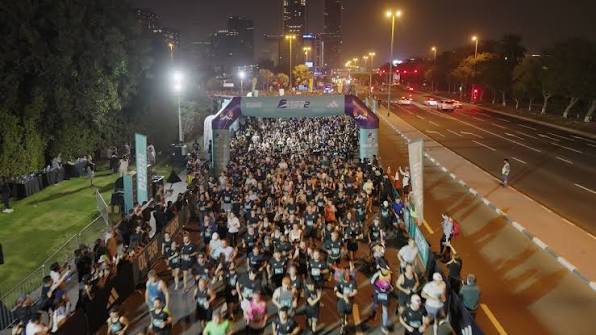
Burj2Burj will return on Sunday, 24 January 2027, bringing thousands of runners back to one of Dubai’s most distinctive half-marathon experiences.
The World Athletics-certified 21.1km event starts at 6:30am and is designed around an idea that is immediately understandable from its name: running through a city defined by iconic towers and extraordinary skylines.
The 2026 edition attracted more than 15,000 runners representing 172 nationalities.
Thirty-nine percent of participants were women, while competitors ranged from teenagers to runners in their seventies.
Those numbers demonstrate that Burj2Burj has developed beyond a conventional local road race.
It has become an international community event.
Why the Half Marathon Is Such a Strong Distance
The half marathon occupies the perfect middle ground for many recreational runners.
It is serious.
Twenty-one kilometres requires preparation.
But it does not demand the same training volume as a full marathon.
That makes the distance achievable for people balancing sport with full-time jobs and family commitments.
For a beginner, completing a half marathon can represent one of the biggest fitness achievements of their life.
For experienced runners, the distance becomes a race rather than a survival exercise.
They can chase fast times while maintaining a pace that would be impossible over a full marathon.
That versatility explains why half marathons continue growing globally.
A Certified 21.1KM Course Matters
The course is officially measured and certified by World Athletics.
This is important for runners who care about accurately recorded performances.
GPS watches are useful but not perfect.
A certified race ensures the actual course meets the recognised half-marathon distance.
That makes personal bests meaningful.
A runner knows the result came from completing the proper 21.1km.
Certification also reflects a broader level of professional race organisation.
The 6:30AM Start Uses Dubai’s Winter Advantage
Late January offers some of Dubai’s best running conditions.
Starting at 6:30am allows participants to use the coolest part of the morning.
This can significantly influence performance.
Heat increases cardiovascular strain.
It raises hydration demands.
Running the same pace becomes more difficult.
Dubai cannot guarantee perfect weather, but January provides far more favourable conditions than much of the year.
International visitors also benefit.
People escaping colder winter climates can race in conditions that feel mild without dealing with Dubai’s summer heat.
Three Hours to Reach the Finish
The race has a three-hour cutoff.
This gives runners an average pace of approximately 8 minutes 32 seconds per kilometre to complete the course.
For many participants, that provides enough time to use a mixture of running and brisk walking.
But people expecting to finish close to the cutoff should still prepare.
Twenty-one kilometres is a significant distance regardless of pace.
Time on feet matters.
Feet, legs and joints need gradual exposure to longer sessions.
Training should therefore include progressively longer runs or run-walk workouts.
Batched Start Corrals Can Improve the Experience
Burj2Burj uses batched start corrals.
This helps organise a large field by separating runners according to expected pace.
Without corrals, faster runners may spend the first kilometres weaving through slower participants.
Walkers may feel pressured by athletes trying to pass.
Grouping runners improves safety and flow.
Participants should provide realistic expected finish times.
Claiming an unrealistic fast time simply to start closer to the front helps nobody.
Running works best when everyone respects the pace of the field around them.
Training Should Begin With Consistency
People considering their first Burj2Burj do not need to immediately run long distances.
Start with consistency.
Three or four manageable sessions per week can create far better results than one enormous run followed by several days of soreness.
Easy running should make up most of the programme.
The long run gradually extends endurance.
A faster session can be added for more experienced athletes.
Strength training can help support running mechanics.
Recovery remains essential.
The goal is not to prove fitness during training.
The goal is to arrive healthy on 24 January.
Long Runs Build More Than Physical Fitness
Long training sessions teach runners about equipment, nutrition and psychology.
Does a particular shoe remain comfortable after 15 kilometres?
Does the runner need a gel?
How much water feels appropriate?
Which clothing causes chafing?
How does pace feel after 90 minutes?
These questions cannot be fully answered through short sessions.
Long runs are rehearsals.
They make race day predictable.
That predictability reduces anxiety.
The First Five Kilometres Should Feel Controlled
Half-marathon excitement creates a common mistake: starting too fast.
The opening kilometres feel easy because the body is fresh.
Other runners create momentum.
Race-day adrenaline hides effort.
A runner can accidentally move significantly faster than training pace.
The cost arrives later.
The final five kilometres of a half marathon can become extremely difficult when early pacing was unrealistic.
Successful runners often feel almost too comfortable at the beginning.
That discipline usually pays off.
Dubai’s Skyline Becomes Part of the Race
The attraction of Burj2Burj extends beyond the distance.
The event is marketed around Dubai’s iconic skyline and landmark-rich urban environment.
Destination running works because the route becomes part of the memory.
Runners remember where they were when the legs became tired.
They remember the sunrise.
They remember the skyline.
They remember the finish.
For international competitors, those visual experiences differentiate one half marathon from another.
The International Field Creates a Unique Atmosphere
More than 170 nationalities were represented in the previous edition.
That level of diversity is particularly appropriate for Dubai.
The city itself is international.
A mass running event reflects that population.
Different languages are spoken at the start.
Running clubs represent different communities.
Tourists line up beside residents.
Yet everyone faces the exact same 21.1km.
Endurance sport creates a temporary shared identity.
Women’s Participation Is Particularly Strong
The fact that 39% of 2026 runners were women is notable for a major mass-participation event.
Representation matters because visible participation encourages more people to believe an event is designed for them.
Running has relatively few structural barriers.
Training can be flexible.
People can exercise alone or in groups.
Large races can therefore create highly diverse fields when organisers make participation accessible.
The Finish Line Means Something Different to Everyone
One runner will be racing for position.
Another will want a personal best.
Someone will be completing a first half marathon.
Another may be returning after injury.
A runner in their seventies could be continuing decades of endurance sport.
Each crosses the same finish line.
That is the appeal.
Burj2Burj provides an international stage, but the most important story for most participants is personal.
On 24 January 2027, thousands will again take on 21.1km through Dubai.
For some it will be fast.
For others difficult.
For everyone, it will be earned.