


Michelin 24H Dubai 2027 Returns to Dubai Autodrome for a Full Day of Endurance Racing
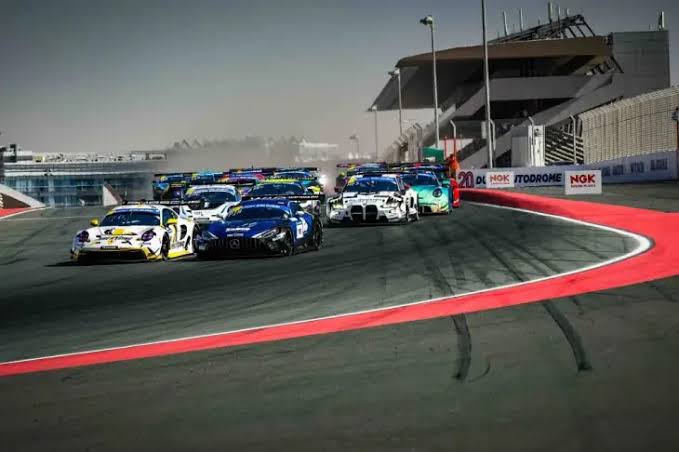
Dubai Autodrome will return to the international endurance-racing spotlight from 8 to 10 January 2027 when Michelin 24H Dubai brings another huge field of GT and touring cars to the city.
Unlike a conventional sprint race, the defining feature is contained in the event’s name.
Twenty-four hours.
Cars race through the afternoon, sunset, complete darkness, sunrise and into the following day.
Drivers rotate.
Mechanics work through the night.
Strategies change.
Cars that appear dominant early can disappear from contention hours later.
Others quietly remain consistent before emerging near the front as exhausted teams enter the final stages.
That combination of speed, engineering and endurance makes 24-hour racing one of motorsport’s most demanding formats.
The Race Is Won by More Than the Fastest Car
Motorsport is often reduced to one simple idea: drive faster than everybody else.
A 24-hour race makes the reality much more complicated.
Raw speed matters.
But reliability may matter just as much.
A car capable of producing the fastest lap can still lose hours because of mechanical trouble.
An aggressive driver can damage tyres or components.
A team can lose valuable time through an inefficient pit stop.
Minor incidents can create major consequences.
The winning strategy therefore needs to combine speed with preservation.
Drivers must push hard enough to remain competitive while avoiding unnecessary risks.
Engineers must monitor the car continuously.
Mechanics need to react quickly when problems appear.
Strategists must decide when to change tyres, when to refuel and how to respond to safety periods or changing race conditions.
The race is effectively a 24-hour problem-solving exercise conducted at very high speed.
Dubai Autodrome Provides the Setting
Dubai Autodrome has become one of the UAE’s most important motorsport venues.
Its combination of technical corners, braking zones and longer sections gives endurance teams plenty to manage.
But the circuit itself is only part of the challenge.
The event unfolds across an entire day and night.
Track temperatures change.
Visibility changes.
Driver energy levels change.
The car behaves differently as conditions evolve.
A setup that feels ideal during daylight may require adaptation once temperatures fall.
Drivers also need to remain alert while sharing the circuit with cars from different categories moving at different speeds.
That traffic management becomes one of the most fascinating parts of endurance racing.
Multiple Classes Share the Same Track
The 24H Dubai field includes different categories of racing cars rather than a grid where every vehicle has identical performance.
Registration for the 2027 edition includes classes such as GT3, GTX, Porsche 992 Cup cars, GT4 and TCE touring machinery.
This creates constant interaction.
A faster GT3 car may approach slower traffic while battling another competitor in its own category.
The driver needs to overtake without losing too much time or taking excessive risk.
The slower car also needs to remain predictable.
The situation repeats hundreds of times.
For spectators, it means there is rarely only one race taking place.
Different classes have their own battles and standings.
A car positioned well down the overall order may actually be leading its category.
Understanding the class structure makes endurance racing much more interesting.
Driver Changes Add Another Dimension
No driver can realistically race competitively for 24 hours alone.
Teams use multiple drivers who rotate throughout the event.
That creates a challenge absent from many forms of motorsport.
The car must suit several people.
Drivers can have different heights, preferences and driving styles.
One may be exceptional at night.
Another may manage tyres particularly well.
A third may be strongest during high-pressure qualifying-style stints.
Teams need to decide when each driver should be used.
Rest becomes part of race strategy.
A driver leaving the car may have only a limited period to eat, recover and sleep before returning several hours later.
That requires physical and mental discipline.
Driving a race car at speed demands enormous concentration even when fully rested.
Doing it during the early morning after a disrupted sleep cycle is something else entirely.
Night Racing Changes the Atmosphere
One of the biggest attractions for spectators is the transition into darkness.
Motorsport under lights has a distinctive visual character.
Headlights become more prominent.
Brake discs may glow.
Pit crews work beneath artificial lighting.
The circuit feels completely different from the afternoon version of the same race.
For drivers, visibility becomes more complicated.
Reference points change.
Traffic can be harder to judge.
The glare from mirrors and headlights adds another challenge.
Meanwhile, temperatures usually fall.
The effect on tyres and track grip can influence performance.
Teams that adapt effectively to the night phase can make major progress while rivals struggle.
Pit Stops Become Their Own Competition
A 24-hour race requires many pit stops.
Fuel must be added.
Tyres need changing.
Drivers rotate.
Mechanical adjustments may be necessary.
Every stop creates an opportunity to gain or lose time.
The quickest teams perform routine pit work with remarkable precision.
Everyone has a role.
Tools have a position.
The sequence is rehearsed.
There is very little unnecessary movement.
But endurance racing also demands something beyond speed: diagnosis.
If a problem develops, mechanics have to determine whether the car can continue safely.
Repairing a vehicle quickly enough to return it to the track can save an entire race.
One of the remarkable features of endurance competition is seeing heavily damaged or mechanically troubled cars reappear after long repairs.
Finishing itself carries significance.
Reliability Becomes a Sporting Skill
Cars are machines, but keeping them alive for 24 hours requires human decision-making.
Drivers must avoid abusing the equipment.
Teams monitor temperatures and pressures.
Engineers look for warning signs.
Sometimes a small reduction in pace can protect the car and produce a better final result.
This is difficult for racing drivers because their instinct is usually to go faster.
Endurance racing rewards patience.
A team does not need to lead after one hour.
It needs to remain competitive after 23.
That changes the psychology completely.
The Final Hours Can Be the Most Dramatic
After spending most of a day preserving machinery and managing strategy, the final hours can suddenly become much more aggressive.
The remaining gaps are clear.
Teams know what is at stake.
If two cars remain on the same lap, the race can effectively transform into a sprint after almost an entire day of competition.
That contrast is extraordinary.
Drivers who have spent hours avoiding unnecessary risks may suddenly need to attack.
Pit strategy becomes more aggressive.
Every second matters.
A race that has lasted through an entire night can still be decided near the end.
A Great Event for Motorsport Newcomers
You do not need to watch all 24 hours to enjoy endurance racing.
That is one of its advantages as a spectator event.
Fans can experience different phases.
Visit during the start and see the full field together.
Return or stay into the evening to experience night racing.
Follow live timing to understand class battles.
Watch the closing stages to see which cars survived.
The paddock and pit-lane activity also provide a deeper sense of the teamwork involved than spectators receive from many shorter races.
For children interested in cars and engineering, the event can be particularly fascinating.
It demonstrates that motorsport depends on much more than the person holding the steering wheel.
Dubai’s Motorsport Calendar Needs Events Like This
Dubai is associated with many sports, but motorsport remains an important part of the city’s sporting identity.
Dubai Autodrome provides a permanent circuit capable of hosting international and domestic competitions.
The 24H Dubai gives the venue an event with substantial international reach.
Teams and drivers travel from abroad.
Different manufacturers and racing categories appear together.
The event places Dubai into a global endurance-racing calendar.
January is also well suited to motorsport because conditions are far more comfortable than during the hottest part of the year.
Twenty-Four Hours Create Thousands of Stories
The overall winner naturally receives the most attention.
But one reason endurance racing attracts dedicated followers is the number of stories happening simultaneously.
A class leader can suffer a mechanical failure.
A team recovering from an early problem can climb back through the order.
An amateur driver can produce an unexpectedly strong stint.
Mechanics can repair a damaged car that looked finished hours earlier.
Teams that have never competed in Dubai can discover the particular demands of the circuit.
By the time the chequered flag falls, every surviving car has experienced a different race.
From 8 to 10 January 2027, Dubai Autodrome will once again become the centre of that controlled chaos.
Fast cars will matter.
But resilience, teamwork and reliability will matter just as much.
That is what makes the Michelin 24H Dubai one of the most distinctive motorsport events on the city’s calendar.